Attendance and Arrival
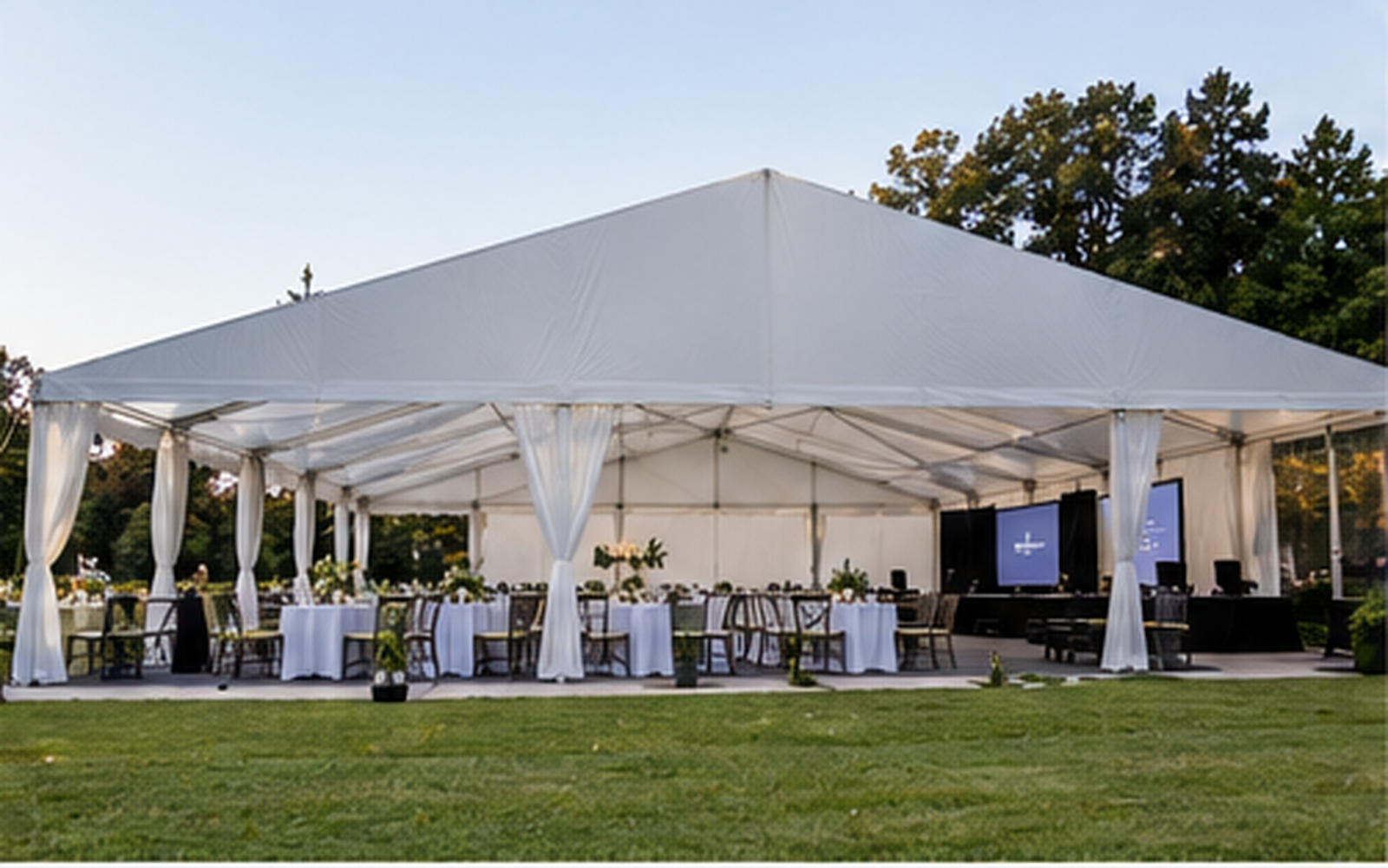
Expected attendance and how people enter can set the first operational need before seating or standing areas are mapped.
Piedmont Triad Event Tent Planning
An event tent plan may need to account for guests, staff, vendors, check-in, food service, presentations, equipment and site access. Organized events often have more moving parts than a private celebration. Provider availability depends on the location and event details.
HOW WILL THE EVENT OPERATE?
Start with how the event will operate. Expected attendance, check-in, seating or standing areas, presentations, food service, vendors, staff space and loading access can each change the covered footprint. This page does not use occupancy formulas.
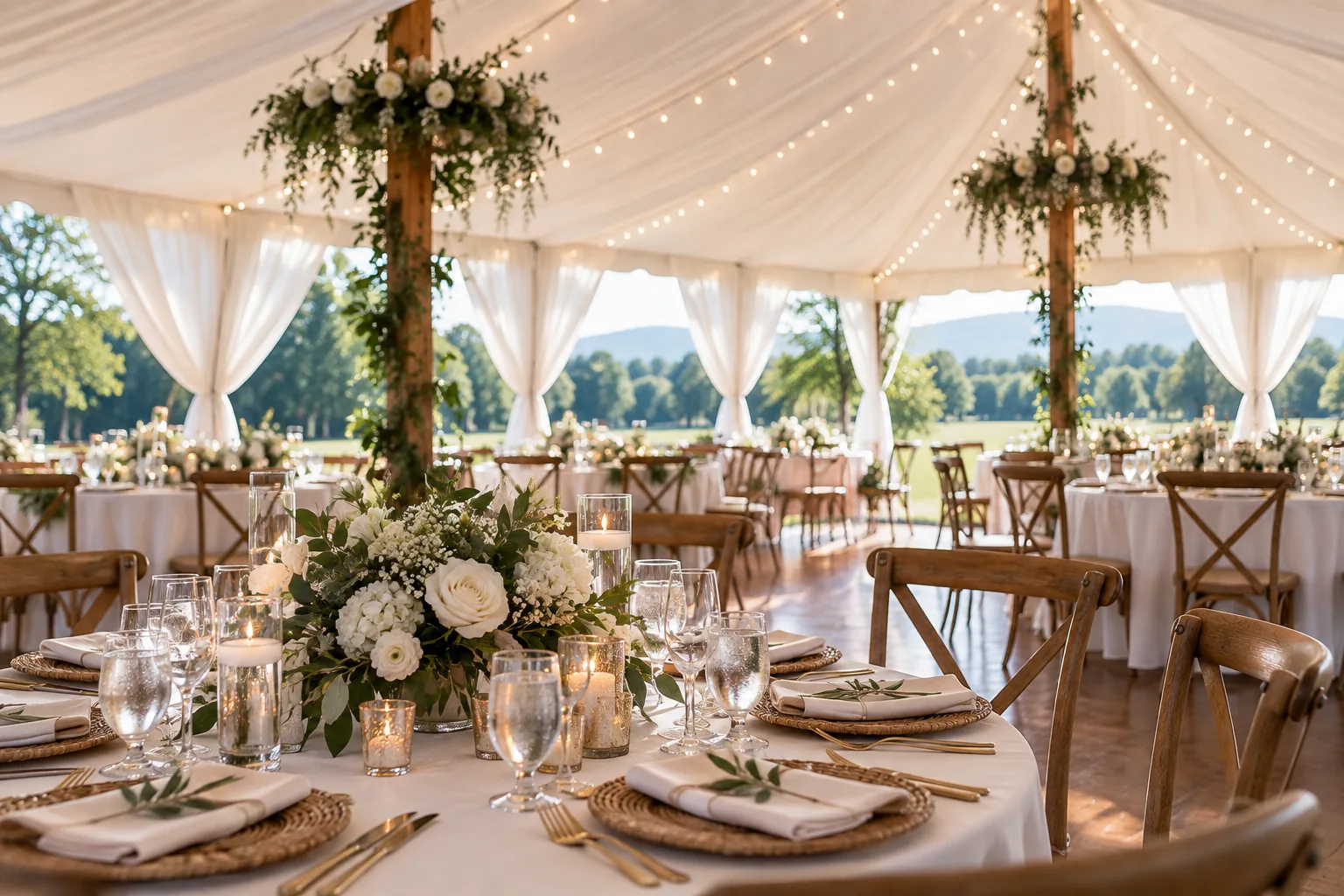
Expected attendance and how people enter can set the first operational need before seating or standing areas are mapped.
Registration or check-in should sit where it does not block the program, service lines or vendor areas.
A speaker area or catering line can pull circulation away from seating and needs its own clear path.
Exhibitors, catering staff and event operations may need service zones that guests do not walk through.
Setup and breakdown access can decide whether the site works before the layout is finalized.
A weather backup and any property or permit questions belong in the same operational plan.
The Tent Size Guide can help sketch attendance, seating and program space once the event operation is clear. Paved lots still belong in the hard-surface planning guide. Weather notes in the tented wedding rain plan are wedding-framed, but many of the same outdoor-site questions can apply to an organized event. A tent is not a guarantee of weather protection.
ORGANIZED GATHERINGS
Employee events, meetings, company gatherings, school or church functions, nonprofit programs and fundraisers often need check-in, seating, a presentation area, catering access, equipment placement, guest circulation and setup access. Not every provider can support every format.
Staff events and company gatherings usually need arrival control, seating or standing zones and a place for remarks that does not block food or service lines.
If people will sit through a program, the tent may need a presentation area, aisle space and conceptual equipment placement that guests do not have to walk around.
Campus or congregation events can add check-in, accessibility, parking and property-use questions to the same operational layout.
A fundraiser or organization program can still need registration, seating, catering, circulation and setup access even when the guest list is not a company roster.
This site does not provide production equipment, staging systems or guaranteed inventory. Share the event type and the functions that need to happen under cover so an independent provider can review what is already known.
PUBLIC-FACING EVENTS
Community events, fundraisers and festivals can spread across several activity areas: vendor booths, information or check-in, food service, a stage or presentation space, guest flow and staff or service access. Public or managed property can add approval questions that a private site may not raise.
One tent may cover the main program, or several covered areas may serve vendors, food and presentations. Guest flow has to connect those zones.
Booths, information tables and food service need their own paths so registration and the program do not share the same bottleneck.
A stage or presentation area becomes a destination. Aisles should leave room for guests, staff and service movement around it.
Parks, campuses and other managed sites can add access windows, duration limits and approval questions that belong in the event plan early.
Not every event type can be handled by every provider. Coverage and equipment depend on the requested location, date and event details.
CHECK-IN AND CIRCULATION
Organized events usually have a defined arrival point. Registration, check-in, entrances, aisles, seating or standing areas, service lines, vendor rows and exits should be planned as one circulation path. This page does not provide fire-code or egress calculations.
Accessibility should be considered at a planning level: how people reach check-in, seating or standing areas, and whether staff have a quieter route that does not cut through the audience. This page does not make ADA or legal-compliance claims.
VENDORS, STAFF AND SERVICE
Catering, exhibitors, speakers or performers, event staff and storage or service zones can take as much planning as guest seating. This site does not coordinate vendors or assign provider responsibility for those relationships.
Catering may need a service zone, conceptual equipment placement and a path that does not send staff through the audience.
Vendor booths, information tables and a speaker or performer area each need access for setup before guests arrive.
Event staff, storage and equipment placement conceptually belong in the layout so they are not squeezed into guest circulation.
Vendors and staff still need a way to load in and load out after the guest-facing plan is drawn.
LOADING, ACCESS AND SETUP
For organized events, loading and unloading can decide whether a site works before the guest layout is finished. Vehicle access, gates, narrow openings, the distance from a parking or loading area, hard surfaces, slopes and site restrictions all belong in the request.
Concrete, asphalt or other paved surfaces can change how a tent is secured. The hard-surface planning guide covers those site questions. A restricted setup window, a locked gate or a long carry from the nearest hard surface can change what a rental provider can evaluate. This page does not give operational safety instructions.
WEATHER PLANNING
Event weather planning is operational: how guests move, whether vendor or service areas stay usable, where equipment sits, and whether entrances remain workable. Flooring or sidewall considerations may come up. A tent is not a guarantee of weather protection and does not provide complete protection from severe weather.
The rain-plan guide is written around tented weddings. Many of the same outdoor-site notes can still apply to an organized event.
COST FACTORS
An event quote can change with more than tent size. Attendance, layout complexity, vendor or staff areas, stage or presentation space, conceptual equipment needs, surface, access and duration all belong in that conversation.
Requested items such as sidewalls, flooring or lighting can add complexity when an organized event also needs vendor or staff coverage. This page does not publish prices. If you are comparing published examples, use the Piedmont Triad tent rental price guide and look at what is included rather than treating one headline number as an event rate.
See the Piedmont Triad Tent Rental Price GuidePUBLIC PROPERTY AND VENUE RULES
Organized events may need venue or property approvals in addition to any tent or fire review. Public or managed property can introduce extra requirements, and municipal rules vary. A special-event permit may be separate from tent or fire approvals. This page does not repeat city-by-city permit detail.
Confirm current requirements with the venue or property owner and the applicable local authority, then discuss them with the independent provider handling the event. Compare regional notes in the Piedmont Triad tent permit guide, then review planning for Greensboro, Winston-Salem or High Point as needed.
PLAN BY LOCATION
Start with the city where the organized event will take place. Access, property-use and approval questions can differ even when attendance is similar. This page stays focused on event operations.
Review Greensboro-focused planning for campus, civic and other organized outdoor events.
Greensboro event tent planningReview Winston-Salem-focused planning for downtown, neighborhood and venue-based events.
Winston-Salem event planning resourcesReview High Point-focused planning for public-property questions and organized gatherings.
High Point tent rental planningThis page stays on organized-event operations. If the gathering is more clearly a wedding or a private party, those pages frame those layouts instead.
Ceremonies, receptions and backyard weddings raise seating, catering and weather questions that often go beyond a general event layout.
Plan a Tented WeddingBirthdays, graduations, showers and backyard celebrations can use a different mix of seating, food service and site conditions.
Plan a Tented PartyBE READY TO REQUEST HELP
You do not need every operational detail finalized. The event date, location, event type, an attendance estimate and what you already know about check-in, loading access, surface or approvals are enough to start. Online request delivery is not yet active. When a request process is available, the information may be shared with an independent event-rental provider serving the requested area.
Request Tent Rental HelpShare the event date, location or address, event type and expected attendance if you have them. Check-in or entry needs, seating or standing layout, food or service plans, vendor or exhibitor space, presentation or stage needs, loading access, surface, property restrictions and any known approval questions can be added as they become clear.
Request Tent Rental HelpAttendance is a starting point, but how the event operates matters more. Check-in, seating or standing areas, presentations, food service, vendors and staff zones can change the covered footprint. This page does not use occupancy formulas. The Tent Size Guide can help frame those layout questions before a request is shared.
Tent Size GuideA tent may be possible on concrete or asphalt, but loading access, vehicle reach, staking restrictions, parking-lot rules and how the tent would be secured all need review. The rental provider should evaluate the specific event site.
Hard-Surface Tent Planning GuidePlan for how guests, vendors and staff would move if weather changes. Entrances, service areas, equipment placement, flooring or sidewall considerations and a severe-weather backup all belong in that conversation. Who will decide if the plan changes should be identified early. A tent is not a guarantee of weather protection and does not provide complete protection from severe weather.
Tented Wedding Rain PlanOrganized events may need venue or property approvals in addition to any tent or fire review. Public or managed property can introduce extra requirements, and municipal rules vary. A special-event permit may be separate from tent or fire approvals. Confirm current requirements with the property owner, the applicable local authority and the independent provider handling the event.
Compare Piedmont Triad Tent Permit RequirementsCorporate and organizational events often need check-in, seating, a presentation area, catering access, equipment placement and guest circulation. Community events, fundraisers and festivals can add vendor booths, multiple activity areas and public-property questions. Setup access matters in both cases. Not every event type can be handled by every provider.
Yes. You do not need every operational detail finalized. The event date, location, event type, an attendance estimate and what you already know about check-in, loading access, surface or approvals are enough to start. Online request delivery is not yet active. When a request process is available, the information may be shared with an independent event-rental provider serving the requested area.
Share the event date, location, event type, expected attendance and what you already know about check-in, loading access or site conditions so the request can be reviewed. Piedmont Triad Tent Rentals is an informational and referral website, and service requests may be shared with an independent event-rental provider serving the requested area.
Prefer to call? Call or Leave a Message: 336-919-2020